

Grief revealed about family is something few people prepare you for, especially when loss exposes emotional patterns that were always there beneath the surface.
There is something deeply unsettling about realizing you are grieving while simultaneously being forced to monitor the emotional behavior of everyone around you. Most people assume grief looks the same for everybody. Crying. Shutting down. Falling apart publicly. Wanting to be surrounded by people every second of the day. But grief doesn’t always move like that. Sometimes grief makes you quieter. More observant. More aware. Sometimes it sharpens your instincts instead of dulling them. That awareness confused people around me after my mother passed away. While everyone else reacted emotionally, I found myself processing patterns, tone shifts, omissions, manipulation, and emotional positioning in real time. I noticed who needed an audience. I noticed who wanted control. I noticed who immediately began rewriting events instead of simply mourning the loss we had all experienced together.

What Grief Revealed About Family Boundaries
And unfortunately, I noticed how quickly people choose emotional alignment over truth. One of the most painful moments came only days after my mother died. An aunt approached me and asked, with visible anger in her voice, “Did you tell your mother she was dead to you?” The question itself wasn’t what shook me. It was the fact that she already seemed to believe it before I had even answered. That moment changed something in me.
Not because it was the first lie ever told about me. It wasn’t. But because I realized how quickly grief can become fertile ground for narrative shaping inside fractured families. People stop asking questions directly. They stop seeking understanding. Instead, they emotionally attach themselves to whoever appears the loudest, most wounded, most frantic, or most persuasive in the moment. And if you are the quieter one — the one processing internally instead of publicly spiraling — people sometimes mistake your composure for guilt.


Why Boundaries Become Necessary After Loss
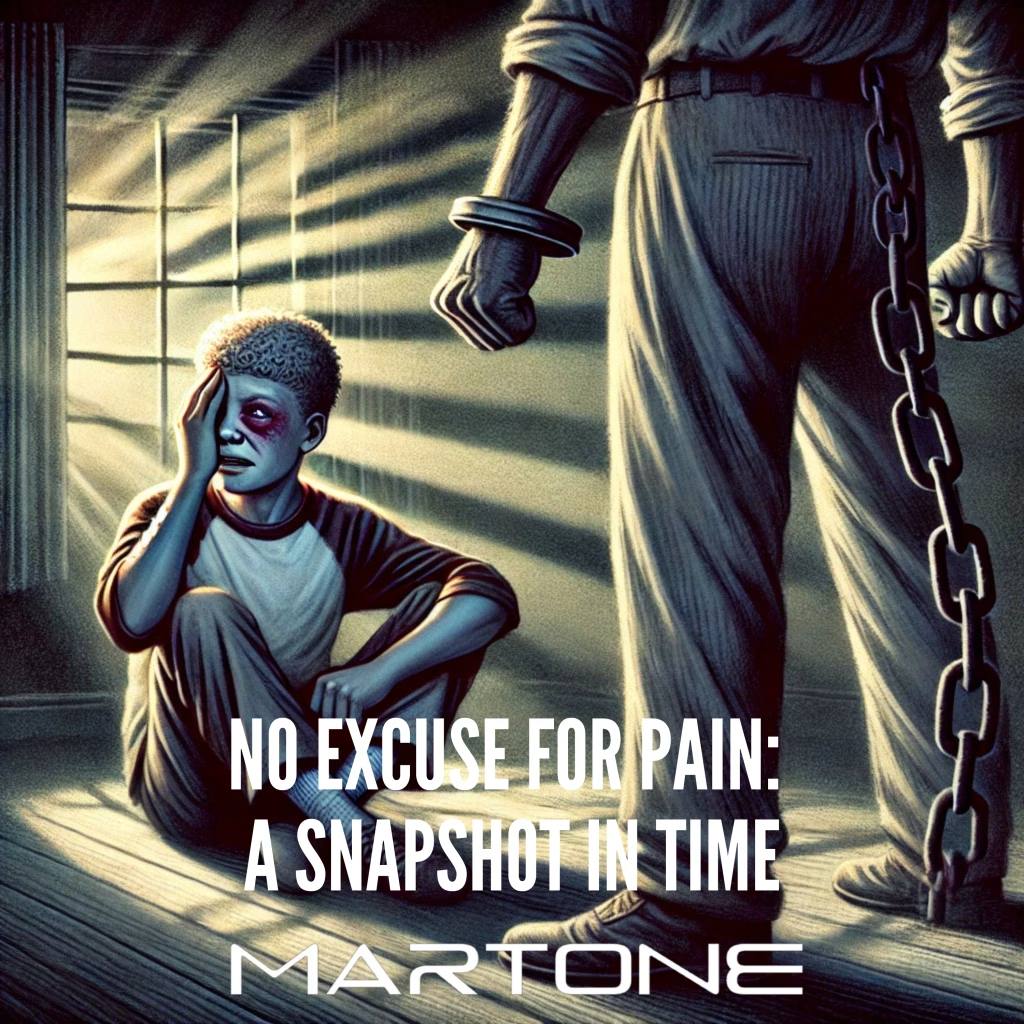
What many people failed to understand is that my awareness during that time did not come from nowhere. It came from years of survival conditioning. Growing up around physical violence teaches you things about people long before adulthood ever arrives. You learn to read tone before words. You learn to anticipate emotional escalation before it happens. You learn that silence can sometimes be safer than reaction. You learn to stay alert even while hurting.
So yes, while grieving, I was also observing. I noticed the emotional urgency from people who suddenly demanded immediate access to me while I was still trying to process what had happened myself. I noticed pressure disguised as concern. I noticed anger disguised as grief. I noticed omissions that later created unnecessary financial hardship. I noticed people choosing comfort over accountability because challenging certain narratives would have required courage. And perhaps the hardest realization of all was understanding that some people would never ask me for my side of the story.
That realization also forced me to confront something uncomfortable about myself: once I make peace with a decision, I rarely revisit it. I am a very stubborn person, and when I decide something, I become tenacious about it. Nothing and no one can change my mind once I’ve fully understood why I needed to make that choice in the first place.


For me, going no contact was never about revenge. It was about survival. Some people believe boundaries are temporary emotional reactions, but sometimes boundaries are the only thing standing between your healing and the chaos that keeps reopening the wound. Once I understood that certain relationships thrived on confusion, pressure, guilt, and emotional instability, I stopped trying to negotiate my way back into spaces that no longer felt emotionally safe for me. That hurts more than the lie itself sometimes. Because when people truly know you, they ask questions before making conclusions.
They recognize your character before accepting accusations. They understand your patterns before believing distortions. But grief exposes every weak foundation within a family system. Old resentments surface. Emotional immaturity becomes impossible to hide. People revert to familiar roles — hero, victim, savior, scapegoat. And if you have spent your entire life being the emotionally aware one, the responsible one, or the one constantly forced to self-regulate, eventually something inside of you changes.
Protecting Your Peace Is Not Cruelty
You stop explaining yourself endlessly.
You stop chasing people for understanding.
You stop rearranging your nervous system to accommodate chaos that was never yours to carry in the first place.
That does not mean you stop loving people. It does not mean you become cold. It simply means you begin protecting your peace with the same intensity you once used trying to save everyone else from themselves.
For most of my life, I watched people pour from empty cups. I watched exhaustion become identity. I watched emotional labor become expectation. I watched survival mode become normalized inside families that rarely paused long enough to heal. I refuse to live like that anymore. That refusal has upset some people. It has confused others. Some interpret boundaries as cruelty because they benefited from your lack of them for years.
But there comes a point in life where preserving your own emotional stability is not selfish — it is necessary. Grief taught me many things, but perhaps the most important lesson was this: Everybody who stands beside you during tragedy is not necessarily standing with you. Some people stand near pain only to position themselves within the story. And once you realize that, you begin moving differently.
Quieter.
Sharper.
More intentional.
And no longer willing to abandon yourself just to make other people comfortable.
Share via:
 English